Displaying reports 81941-81960 of 86125.Go to page Start 4094 4095 4096 4097 4098 4099 4100 4101 4102 End
Reports until 14:35, Wednesday 26 September 2012
H1 ISC
keita.kawabe@LIGO.ORG - posted 14:35, Wednesday 26 September 2012 - last comment - 23:44, Wednesday 26 September 2012(4306)
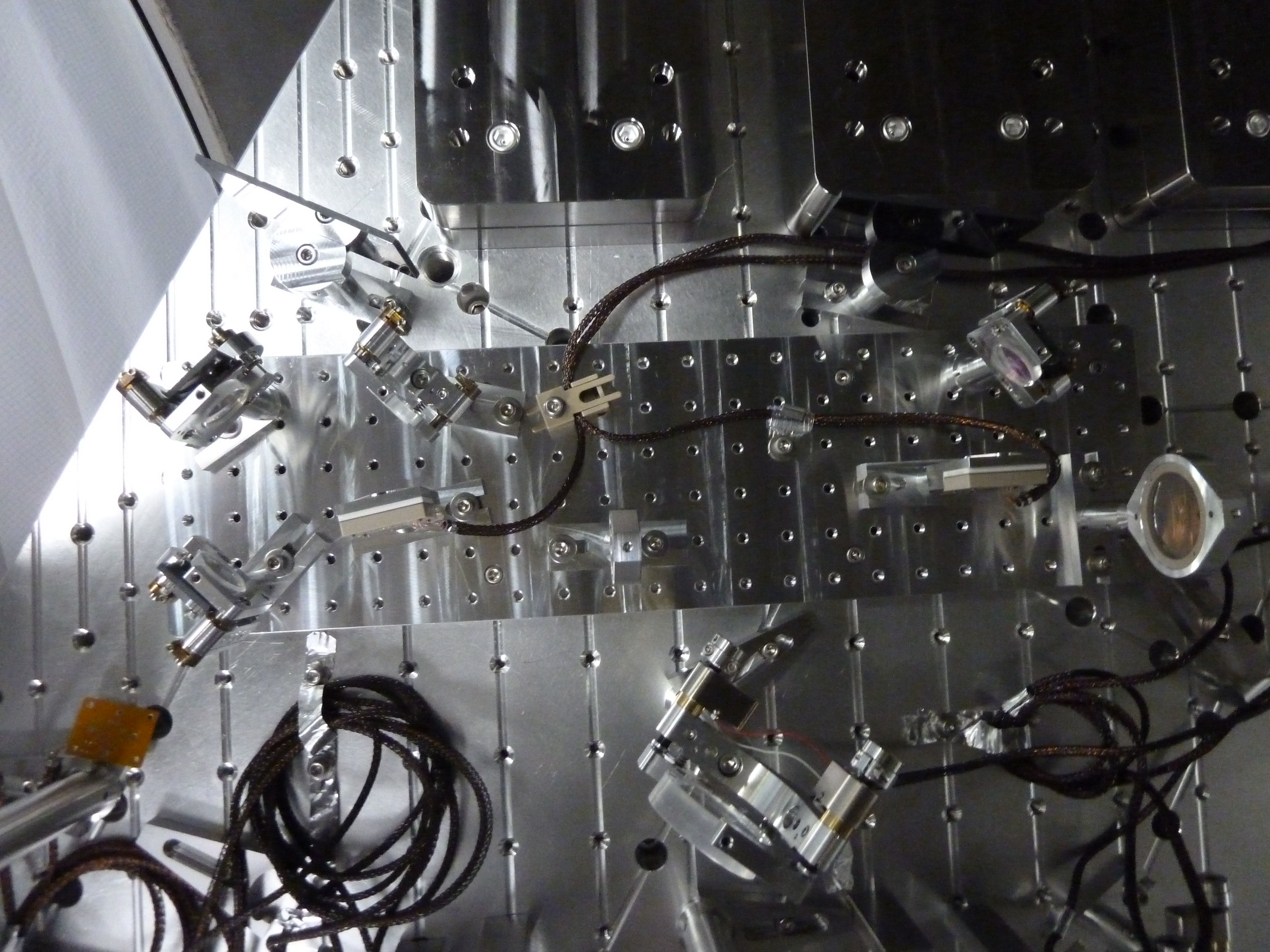
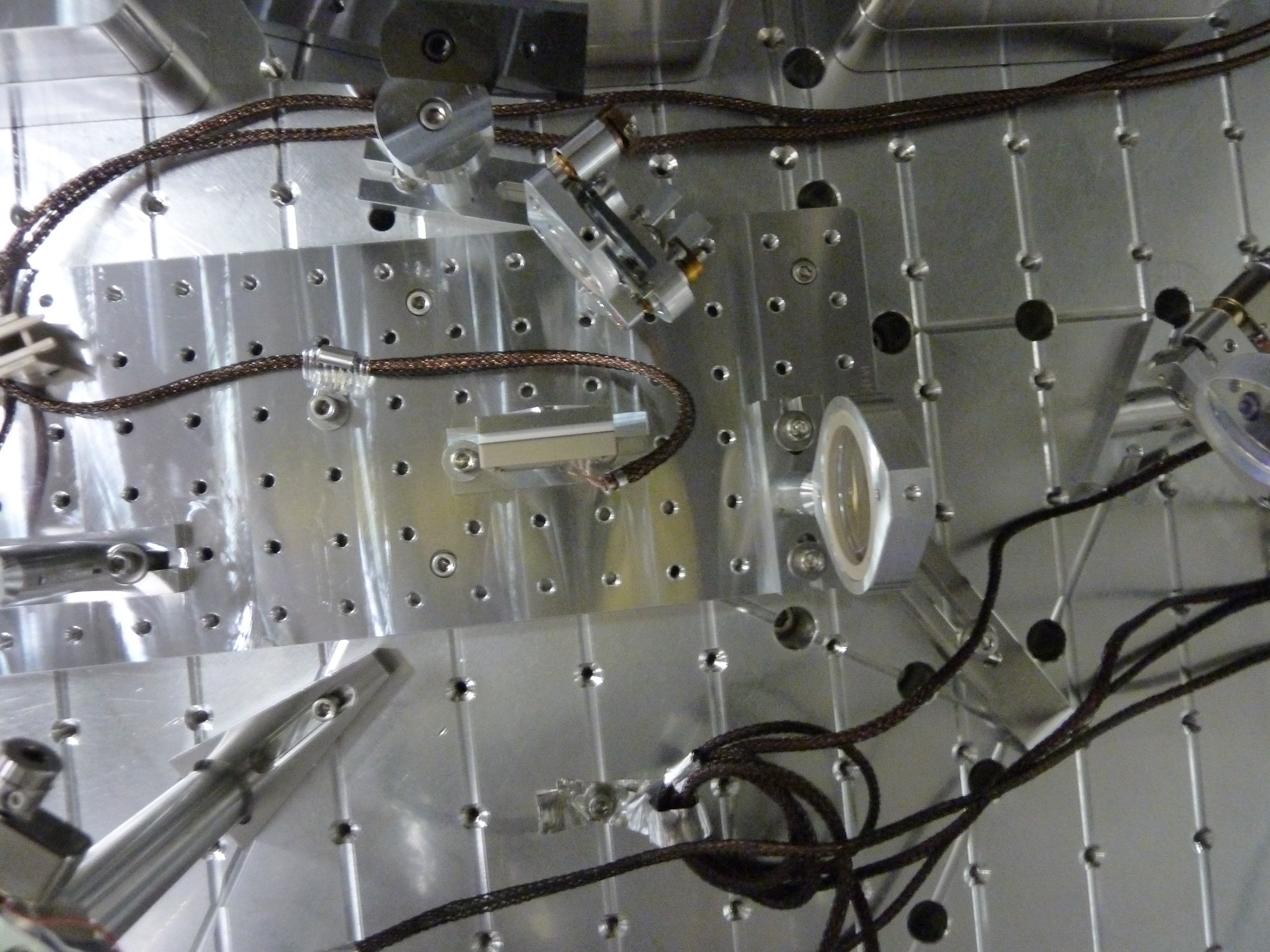
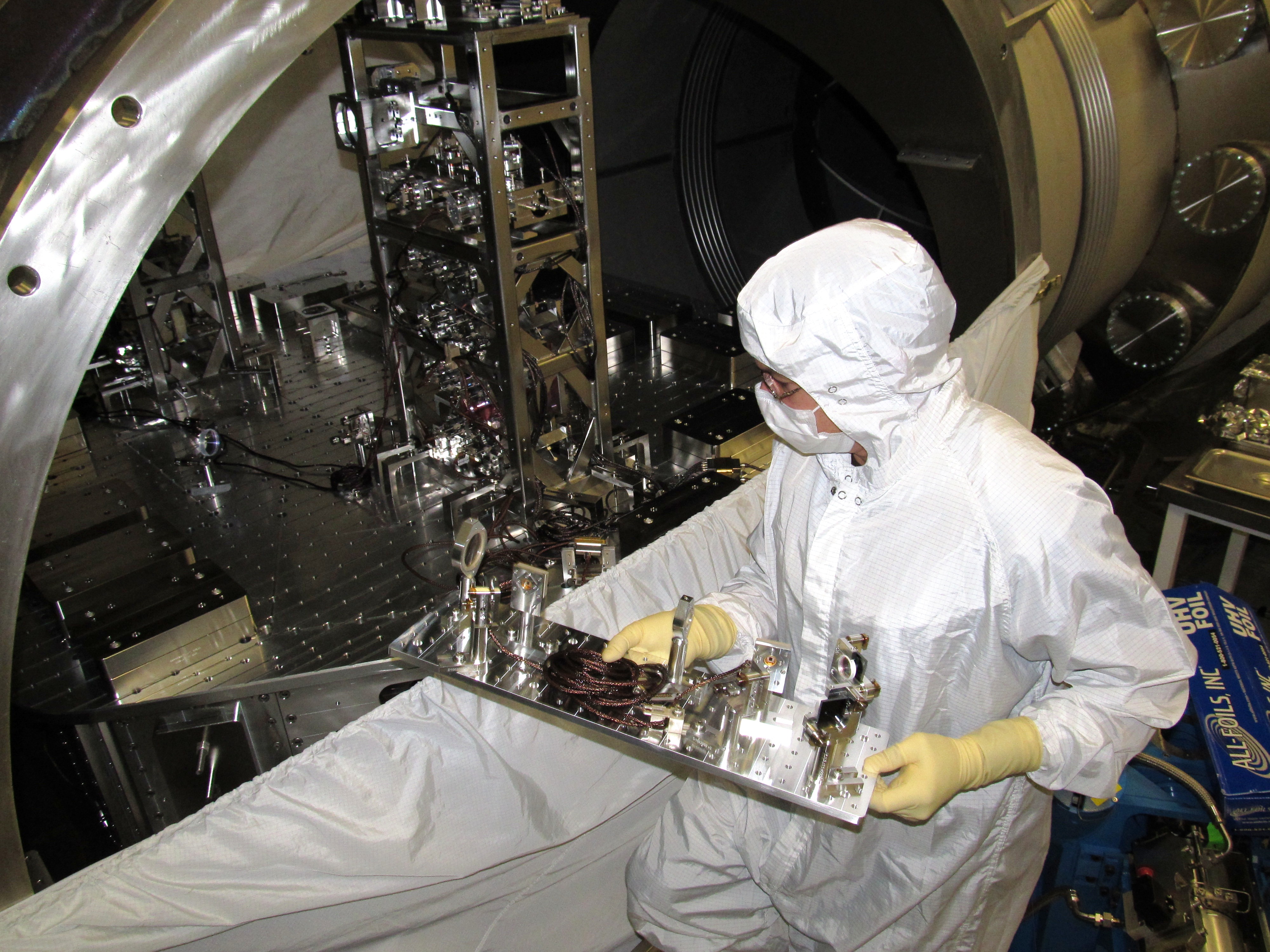
Done with HAM3 IO and ISC installation for now (Cheryl, Daniel, Keita)

Everything we planned to install at this stage was installed.

Picomotors are connected to the in-vac cable (we copied LLO cabling layout), which was connected to the connector bracket 3 upper floor in chamber, which is connected to the feed through. We connected the picomotor driver and the test interface to the feed through from outside, and all picomotor worked:

Pico 1 = ISC steering mirror just upstream of QPD sled.

Pico 2 = ISC steering mirror further upstream of QPD sled.

Pico 3 = IO steering mirror for IO QPD.

Pico 4 = ISC steering mirror that directs POP to HAM1.


We used a laser pointer and a hand held LCD QPD readout box to check the QPDs. Though it cannot test the output of individual quadrants, and though the laser pointer beam was too big (or, rather, QPDs were too small) to put the entire beam on one quadrant, both IO QPD and ISC QPDs seem to respond to the light reasonably.


Some IO components (e.g. IO black glasses and beam dumps and such) will be installed later.

Comments related to this report
cheryl.vorvick@LIGO.ORG - 23:24, Wednesday 26 September 2012 (4315)
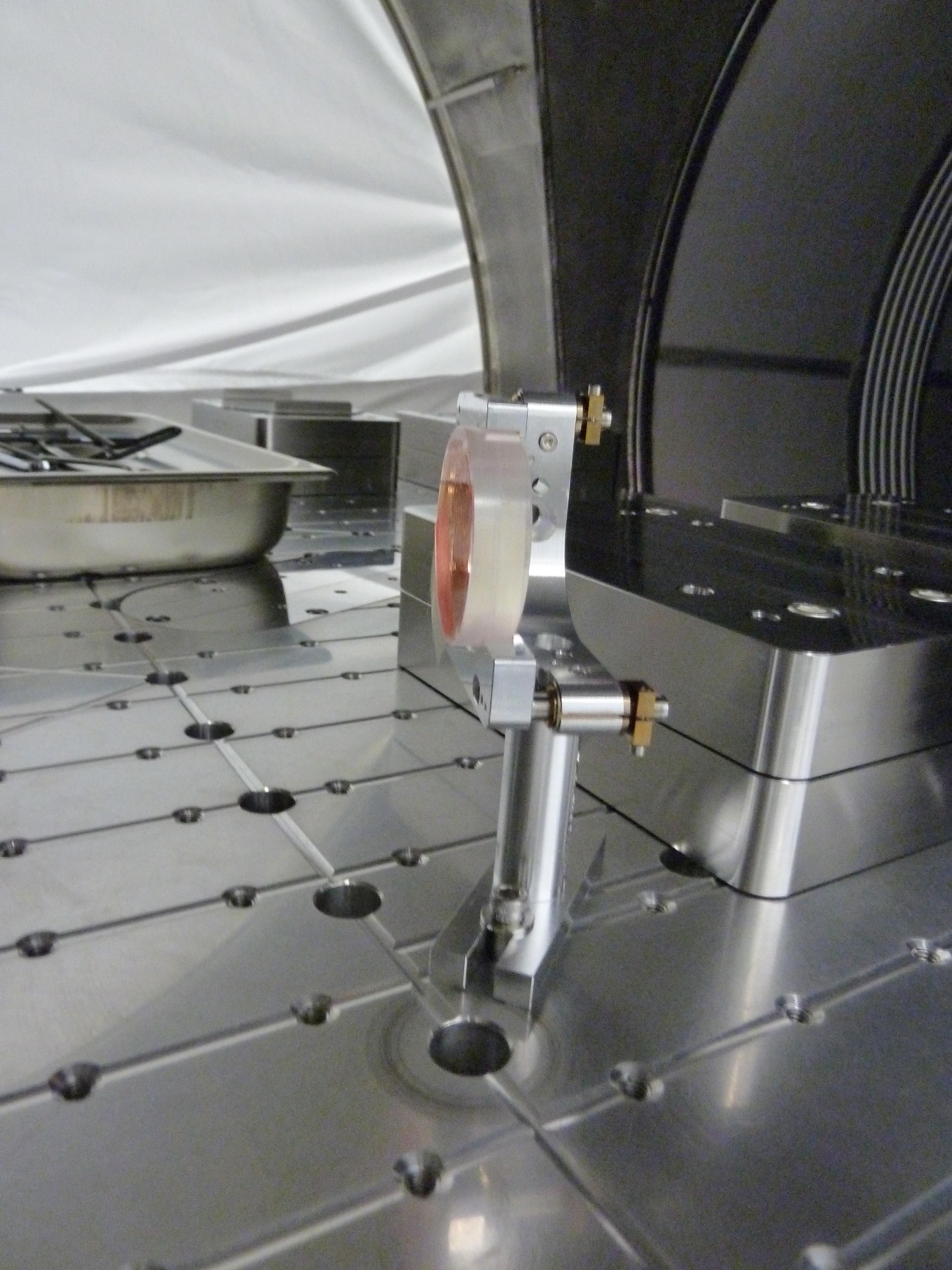
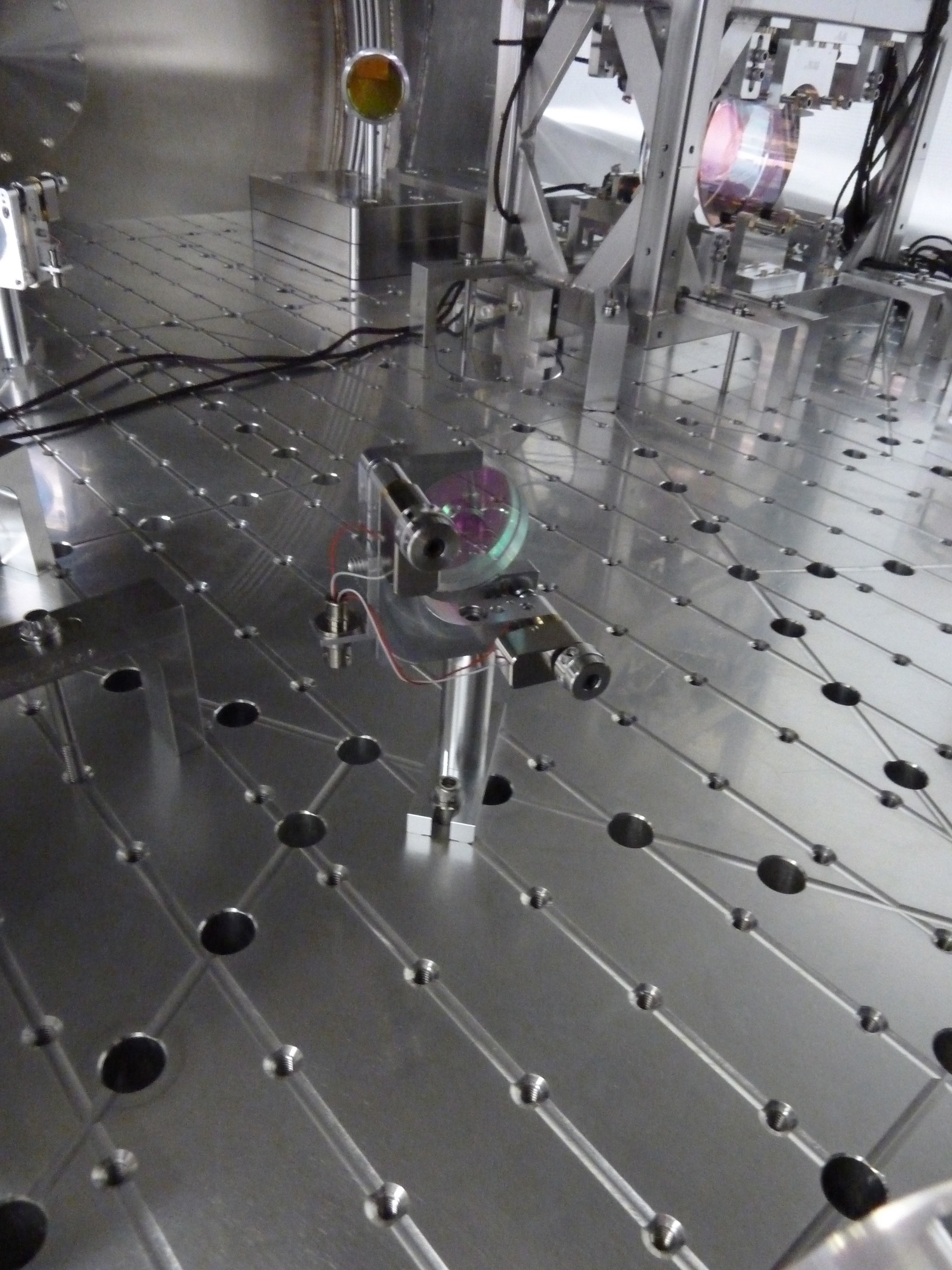
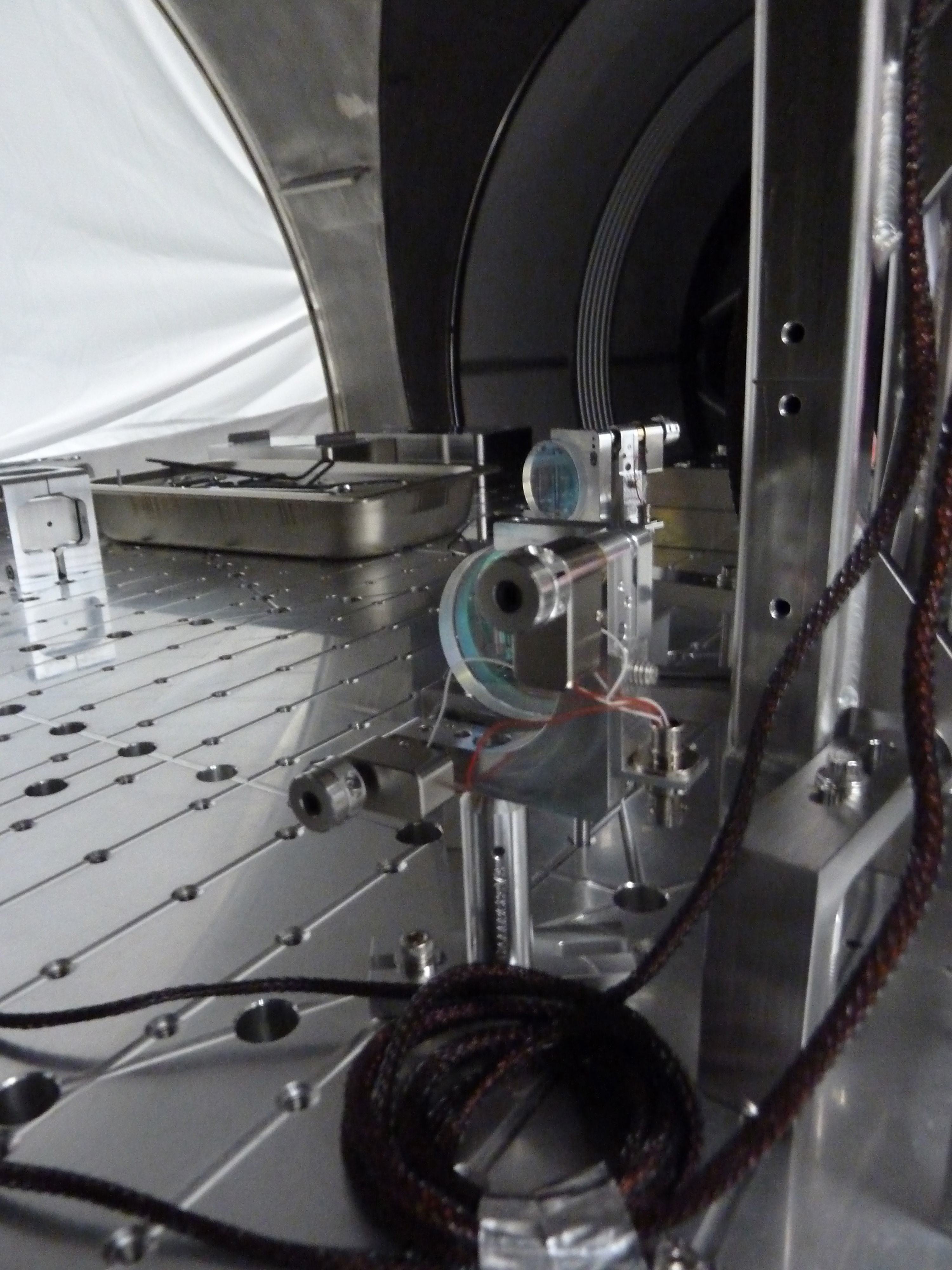
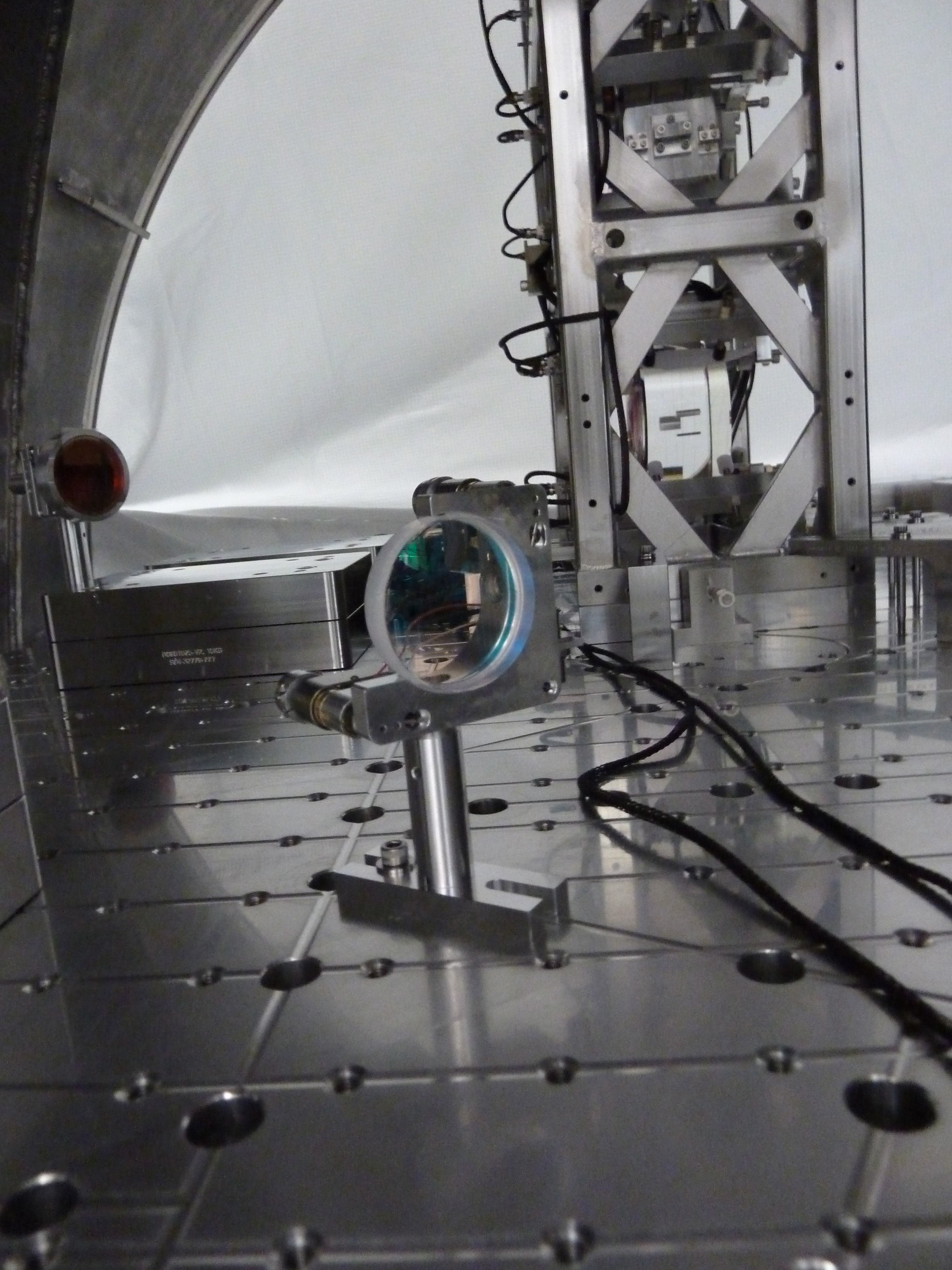
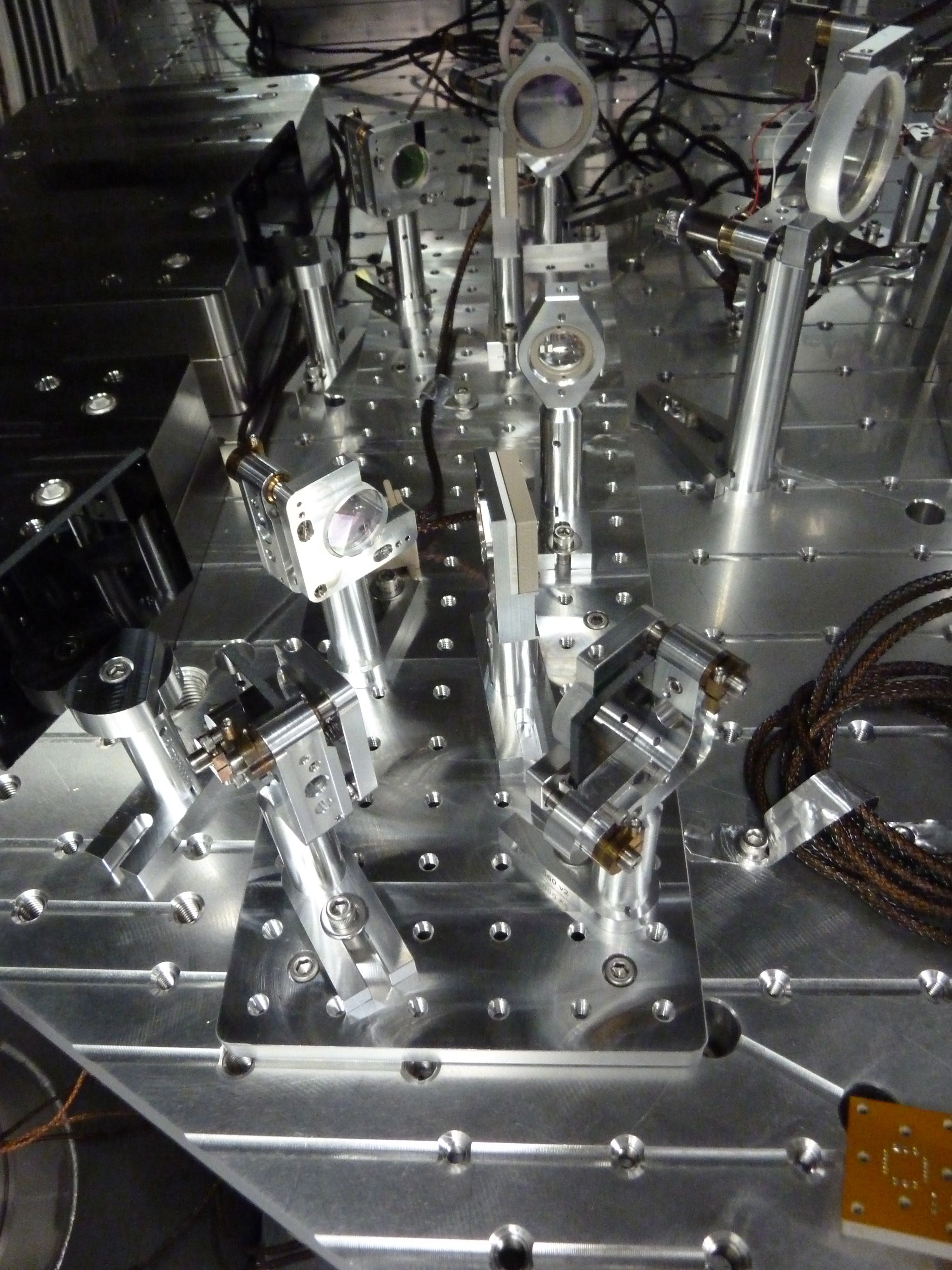
HAM3 ISC SLED pictures:
Images attached to this comment
cheryl.vorvick@LIGO.ORG - 23:44, Wednesday 26 September 2012 (4318)
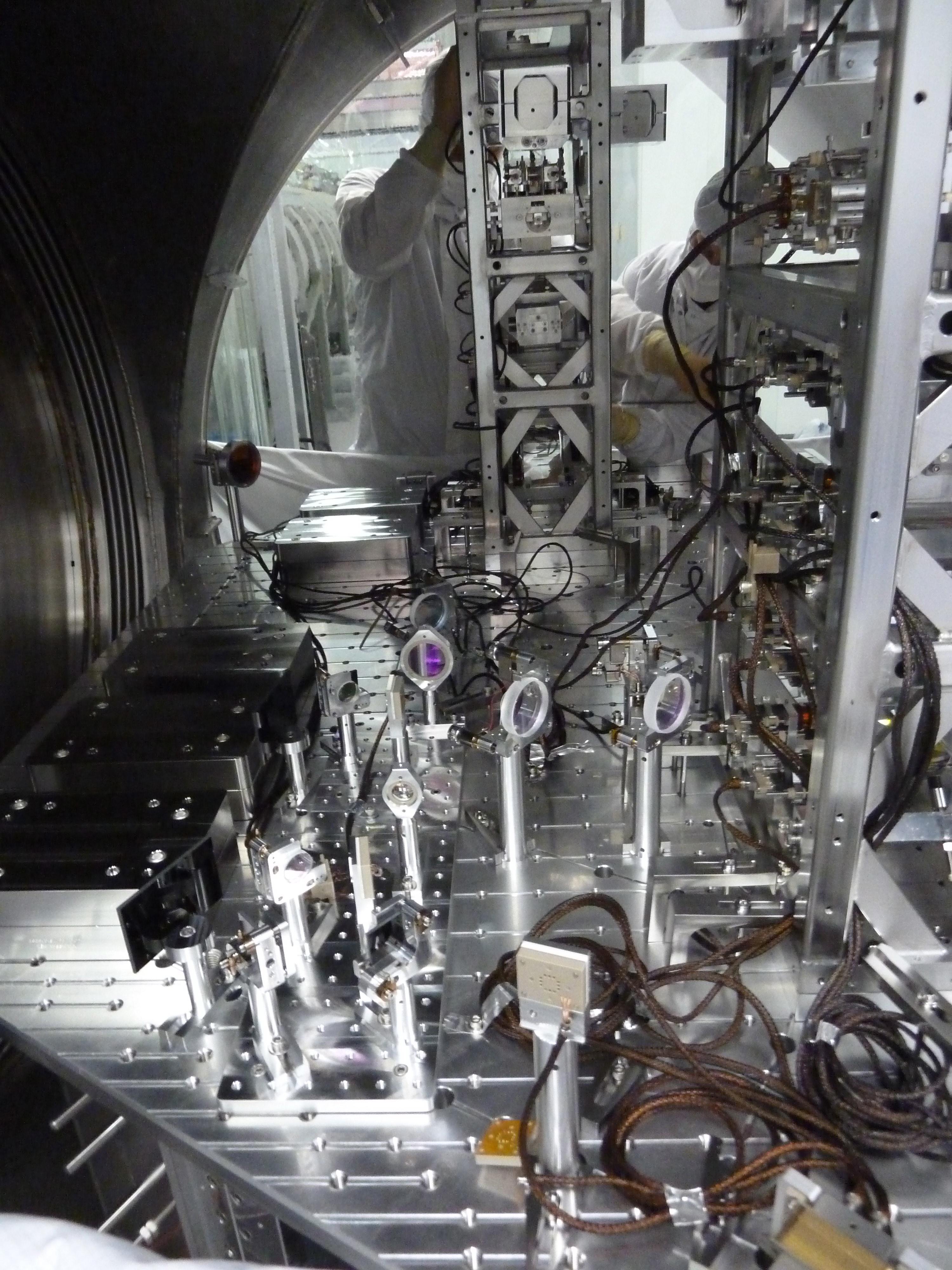
HAM3 current state:  IO and ISC optics

Still to do/install:
- install IO beam dumps on MC Trans
- install Scraper Baffles
- remove FC from 2 IO optics
- install black glass
- align
Images attached to this comment
cheryl.vorvick@LIGO.ORG - 23:32, Wednesday 26 September 2012 (4317)
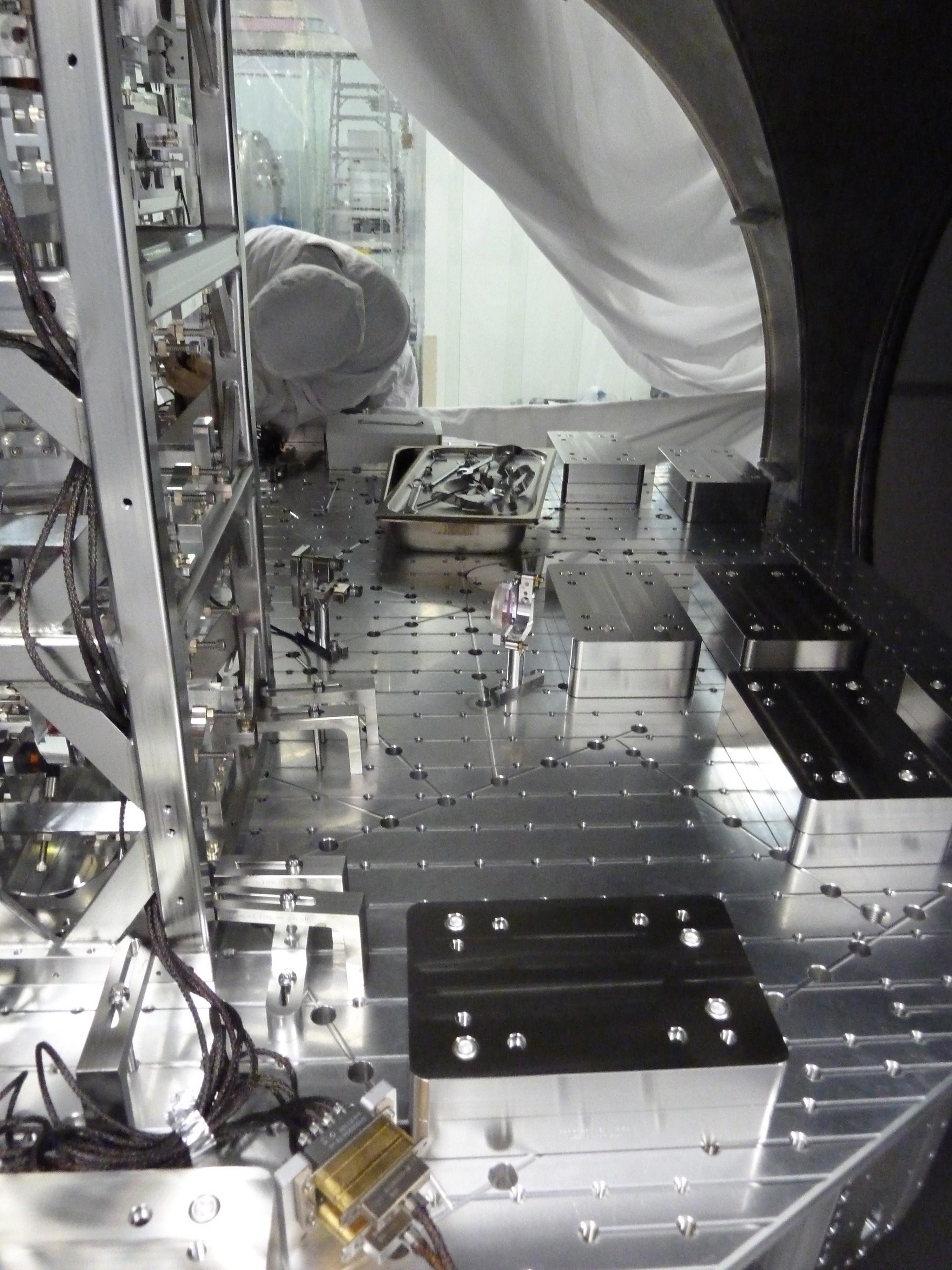
IO mirrors - before cabling Picos.
Images attached to this comment
H1 INS
jodi.fauver@LIGO.ORG - posted 14:16, Wednesday 26 September 2012 - last comment - 15:18, Thursday 27 September 2012(4305)
BSC8 De-Install/BSC1 Install Prep
The Apollo crew worked on the following: craned one aLIGO garbing/staging cleanroom from the beer garden to the south side of BSC8; craned an iLIGO cleanroom from by HAM6 to the E-module; removed BSC8 south door; retrieved walking plates and three-point spreader from Y-end; and located bang boards for cleanroom use. Karen and Cris cleaned both garbing/staging cleanrooms. I staged a few things (garbing rack, staging table, foil, etc.) in the lower level cleanroom.
Comments related to this report
jodi.fauver@LIGO.ORG - 15:18, Thursday 27 September 2012 (4323)
Walking plates and three-point spreader did not make it to the corner after all. >-(
H2 SEI
vincent.lhuillier@LIGO.ORG - posted 11:42, Wednesday 26 September 2012 (4303)
Using the optical levers at low frequency (not so useful to evaluate the amplification of the length of the cavity created by HEPIs and ISIs)

Once all isolation filters are engaged on HEPIs and ISIs, the absolute motions of the optical tables are amplified by less than 10 times in the Y direction while the length of the cavity is amplified by 100 below 100mHz.

Coupling from HEPI-ISI to Test masses (figure 1)
ASDs of the pitch and the yaw of the test masses are presented in three different configurations:
- HEPI ON – ISC Y feedback (UGF: 1mHz) - ISI Damped
- HEPI ON – ISC Y feedback (UGF: 1mHz) - Sensor correction -  ISI Damped
- HEPI ON – ISC Y feedback (UGF: 1mHz) - Sensor correction - ISI Damped & Controlled (100mHz blend with T240s)

This figure 1 shows that:
- When HEPIs at BSC-6 and BSC-8 are ON, ETM & ITM are tilting in pitch and yaw by the same amounts at all frequencies. Blend filters of the IPS on HEPIs have a 800mHz corner frequency (below 100mHz, the blend filters transfer functions are close to 1). Consequently, no amplifications of the pitch and the yaw of the test masses are expected below 100mHz.
- When the STS-2 are introduced in the HEPI super sensor blend (sensor correction), the aggressive high pass filters with a 100mHz corner frequency increase the absolute motion in the X, Y and Z directions. An amplification of the pitch and the yaw of the test masse can be expected due to eventual cross couplings from longitudinal, transverse and vertical displacement of the HEPI-ISI to the test masses. But strangely, only the rotations of the ETM are increased at low frequency. ITM rotations are unchanged or reduced. In this case, the “apparent tilt" seen by the optical levers is probably due to the longitudinal displacement of the test mass in the Y direction (cf Sensitivity of the optical levers to longitudinal displacement)
- Once the ISI is controlled (with blend at 100mHz => maximum amplification at 60mHz), pitch and yaw of the ETM are increased while pitch and yaw of the ITM is moderately increased. When HEPIs (sensor correction) and ISIs are controlled, apparent pitch and yaw of the ETM are amplified by 50 while pitch and yaw of the ITM are not amplified. Remember that the length of the cavity is increased by 100 in this configuration.

Sensitivity of the optical levers to longitudinal displacement
Pitch and yaw seen by the optical levers can be due either the tilt of the mirror or the longitudinal displacement of the test mass as shown in figure 2. In the case of a pure translation of the test mass, the “apparent tilt” seen by the optical levers can express as a function of the longitudinal displacement of the test mass where:
Tilt~d1*dl/(d2^2)
ETM optical levers are about 70 times more sensitive to the longitudinal displacement than the ITM optical levers.

Transfer functions from the “apparent pitch and yaw” (translation in the case of ETM?) of the test masses to the length of the cavity (figure 3).
Transfer functions from pitch and yaw of the test masses to the length of the cavity are presented below in three configurations:
- HEPI ON – ISC Y feedback (UGF: 1mHz) - ISI Damped
- HEPI ON – ISC Y feedback (UGF: 1mHz) - Sensor correction -  ISI Damped
- HEPI ON – ISC Y feedback (UGF: 1mHz) - Sensor correction - ISI Damped & Controlled (100mHz blend with T240s)

When there is no sensor correction, coherences between the apparent tilt (signal probably dominated by actual tilt) of the test masses and the length of the arm are close to 0. But when the controllers are engaged, the contribution of the displacement of the test mass in the tilt signals is probably not negligible especially at ETM. When the sensor correction is engaged, coherences in pitch and yaw are pretty high (0.8) on the ETM around 60mHz and stay at 0 on the ITM.
It seems that the oplev are seeing the translation of the test mass at EY. Consequently, the measured transfer functions are from “translation of the test mass” to length of the cavity. Having a good coherence close to 1 on ETM and 0 on ITM is not abnormal.

Transfer functions ISI to OPLEV (figures 4, 5, 6)
T
ransfer functions from the ISI to the optical levers show a good coherence from the ISI drives (especially in the Y direction) to the optical levers (pitch and yaw) of ETM. The coherence is null on ETM. Oplev are not sensitive to vertical displacement of the testmass, coherences in the case of a Z-drive are low or null.

Non-image files attached to this report
H1 CDS
david.barker@LIGO.ORG - posted 09:47, Wednesday 26 September 2012 (4301)
HAM SEI and SUS front end restarts

We trouble shot a problem with ISI for HAM2. It required a hard power cycle of h1seih23-IOChassis. During the trouble shooting h1sush34 was Dolphin glitched and the MC2, PR2 models froze. I have just restarted all the models on h1sush34.

X1 SUS
mark.barton@LIGO.ORG - posted 09:11, Wednesday 26 September 2012 - last comment - 16:44, Wednesday 26 September 2012(4300)
Taking damped TFs for BSFM02
Mark B.

Need to get a set of TFs for BSFM02 with damping on. Starting now.
Comments related to this report
mark.barton@LIGO.ORG - 16:44, Wednesday 26 September 2012 (4308)
Mark B.

Done for now. Successfully took a set of damped TFs with time label "0900". I noticed at the end of the first attempt that the M1 and User DACKILL WDs had tripped. Looking at trends put the event at 10:18 local, which was just after the third drive file had been saved, so I redid T, V and Y, overwriting the original files. See attached for plots.

I also identified 20 minute data stretches for damped and undamped spectra:

startTimeRef.gps = 1032727669; % GPS Start Time Damping OFF
startTimeRes.gps = 1032726356; % GPS Start Time Damping ON

Again, because BSFM02 is being tested on H2 not X1, I had to create a custom plotting script, plotbsfm_spectraBSFM02.m. It currently has one bug/misfeature to do with saving the plots (it only saves plots for L1, H1 and H2), but I've committed it for now anyway and will work on it more later.

I plan to return this evening to repeat all measurements in quiet time.
Non-image files attached to this comment
H1 SUS
betsy.weaver@LIGO.ORG - posted 19:22, Tuesday 25 September 2012 - last comment - 16:10, Wednesday 26 September 2012(4299)
H1 MC3 Phase 2a TFs

There seems to be some pretty good Vertical to Pitch coupling we need to hunt down tomorrow on this sus.  TFs look OK in some DOFs, but not this one.

Comments related to this report
betsy.weaver@LIGO.ORG - 16:10, Wednesday 26 September 2012 (4307)

We've corrected for some observed pitch error in the tablecloth which mounts the top BOSEMs.  This has seemingly corrected the P-V coupling so I'll rerun the TFs tonight-ish.

H1 SUS
betsy.weaver@LIGO.ORG - posted 19:22, Tuesday 25 September 2012 (4298)
H1 MC3 Phase 2a TFs

There seems to be some pretty good Vertical to Pitch coupling we need to hunt down tomorrow on this sus.  TFs look OK in some DOFs, but not this one.

LHO General
patrick.thomas@LIGO.ORG - posted 18:55, Tuesday 25 September 2012 (4297)
dust monitors
Last Friday I spent most of the morning compiling, testing and modifying the code to read and control the dust monitors. This interrupted the data read from end X. I ended up reverting back to the old code sometime before 12:30 PM.

Today I spent most of the morning doing the same, except it interrupted the data read from end Y. I ended up reverting back to the old code around noon.

This afternoon Michael R. swapped the dust monitor in the H1 PSL Anteroom (LVEA location 16), to investigate if the high counts for particles > .3 microns read last night might be due to an error in the instrument. I ended up restarting the code for all the dust monitors in the LVEA after this was completed.

I received an error trying to plot the particle counts, so I do not have plots to attach yet.
H1 SEI
hugo.paris@LIGO.ORG - posted 18:35, Tuesday 25 September 2012 (4296)
HAM2-ISI - CPS-H1 railed readout

Dave, Hugo,

Sometime around 4.30pm today, HAM2-CPS-H1 showed ~ +32000cts. The Watchdogs were then tripped. We turned off the master switch on the medm screen and the coil-drivers electronics, the readouts remained the same.

Dave and I restarted the h1iopseih23 and the computer/frontend. No change.

Connecting the faulty channel on another sensor interface showed that the signal was following the channel.

I went upstream and checked the voltage outputted by the ADE box of the CPSs: 

-over 13V for this sensor.

-Within +/- 1V for the other ones

I tried connecting CPS-H1 on its neighboring ADE board. I also tried swapping the FeedThrough-to-ADE in-air cables between H1 and V1. 
The readout of CPS-H1 came back to normal during this process. It seems like the in-air FeedThrough-to-ADE cable of HAM2-CPS-H1 is faulty. I left it ON keeping in mind the symptoms we saw. 

H1 ISC
dale.ingram@LIGO.ORG - posted 17:06, Tuesday 25 September 2012 (4295)
ISC Sled installation photos, HAM3
Check ResourceSpace for the photo collection of Keita, Cheryl, Deepak and Corey inserting the sled.  You can call it a breadboard if you want.  Bonus:  A couple shots of Travis working on PR2.
Images attached to this report
X1 SUS
mark.barton@LIGO.ORG - posted 14:39, Tuesday 25 September 2012 (4294)
TFs for BSFM02
Mark B.

After Travis tweaked the BSFM02 on the solid stack, I retested it. I gave up on the Matlab script for data taking and used some DTT templates that Jeff K pointed me to. The data is at 

^/trunk/BSFM/X1/BSFM02/BUILD01/SAGM1/Data/2012-09-25_1100_X1SUSBSFM02_M1_*_WhiteNoise.xml

I modified the standard analysis script to use H2:FMY in the channel names but X1:BSFM02 for the data directory and plot labels. The modified version is 

^/trunk/BSFM/Common/MatlabTools/plotBSFM_dtttfsBSFM02.m

The data is a tiny bit noisy, having been taken in the middle of the day, but all the peaks are in the right places and the spurious 11 Hz peak is gone.
Non-image files attached to this report
H1 INS
jodi.fauver@LIGO.ORG - posted 14:32, Tuesday 25 September 2012 (4293)
BSC8 De-Install/BSC1 Install Prep
The Apollo crew stood down from ICC to work on BSC8 cartridge de-install staging. They positioned the leg-jacks near the appropriate legs and checked for orientation; installed four leg-jacks on the chamber cleanroom; located three BSC dome flats and two HAM ISI storage covers to use in place of BSC Dome Tall; retrieved the dome counterweight from X-end; and removed the dome. 
H1 SEI
hugh.radkins@LIGO.ORG - posted 10:02, Tuesday 25 September 2012 (4289)
OK WHAM1 Height issues resolved--yes blame me, again!
In addition to the backsight error I've been fighting against since 17Sept, see aLOGs 4223 & 4242, and disclosed in yesterday's log 4286; this morning I realized all this time I had failed to correct my target elevation for the HAM1 global to local level difference.  This now puts the Optical Table ~5mm low and this is well explained by the modeled vs measured compression of the Viton Springs which has put the Table 5.33mm lower than planned.

I will correct the incorrect payload noted in aLOG 4242 (11.25lbs) but this won't do too much to change the height and then we'll adjust the vertical to within spec using HEPI.

Thank to everyone for patiently helping me for the past week.
LHO General
patrick.thomas@LIGO.ORG - posted 20:30, Monday 24 September 2012 (4288)
plots of dust counts
Attached are plots of dust counts > .3 microns and > .5 microns in particles per cubic foot.

Note high particle counts > .3 microns in the H1 PSL Anteroom (H0:PEM-LVEA_DST16_3). The > .5 micron counts are 0. The cause of this is as of yet unknown.
Non-image files attached to this report
LHO General
patrick.thomas@LIGO.ORG - posted 18:27, Monday 24 September 2012 (4277)
Ops Summary
Cheryl, Keita, Deepak installation in HAM3
Corey taking packaged box of lasers from corner station to mid Y
Pickup of pallet
Corey to EY to look for parts
Bubba to end Y to bring toolbox to corner station
Jonathan H. to LVEA to look for GC wireless access points
Dave B. to set settings for H1 PSL ODC channels
Dave B. to install Apache on DAQ test stand
Pickup of cardboard container
Return of cardboard container
Very high > .3 micron counts in H1 PSL Anteroom. Unknown case at this time.
H1 ISC
keita.kawabe@LIGO.ORG - posted 16:50, Monday 24 September 2012 - last comment - 14:24, Tuesday 25 September 2012(4284)
HAM3 sled 2

Sadly, the 2" lens on the QPD sled for HAM3 was scratched during the transport from the lab to the LVEA. When we took the sled assembly out of the bag and unwrapped, under a strong lighting it was clear that the center of 2" lens surface that faces outside was scratched, most probably by the aluminum foil that was used to cover the entire assembly. We couldn't blow it off using nitrogen gun, so it's not just particulates.

We have more of these lenses and we'll have one class-A-ed ASAP so the impact on schedule is minimal, but next time we transport any super polished optics, I'll make sure that I first cover it using Vectra Alpha 10 wipe for protection befure wrapping it in the foil. The reason why it was not done was because I couldn't find Vectra wipes in the lab, but it seems like no wipe = no transport.

Comments related to this report
jodi.fauver@LIGO.ORG - 14:24, Tuesday 25 September 2012 (4291)
It is worth noting that in most cases, we prefer to cover larger items with a C-3 cover for transport. A BSC door cover would probably work well for this task.
X1 SUS
mark.barton@LIGO.ORG - posted 10:06, Monday 24 September 2012 - last comment - 12:16, Tuesday 25 September 2012(4278)
Resuming BSFM02 testing
Mark B.

Picking up where I left off on Friday, aiming towards getting TFs.
Comments related to this report
mark.barton@LIGO.ORG - 09:48, Tuesday 25 September 2012 (4287)
Mark B.

Done for the day. Had chronic problems trying to get TF scripts to run, so reverted to a free-swing test to at least get the mode frequencies. Most of the LF modes seem to be where they're supposed to be but there's a huge anomalous peak at 11 Hz in all DOFs but especially V and R.
Non-image files attached to this comment
travis.sadecki@LIGO.ORG - 12:16, Tuesday 25 September 2012 (4290)

I went in to diagnose what might be causing the anomalous 11Hz peak and found that the Top Stage blade EQ stop (aka the goalpost) was locking the right side blade down.  I released this, then made a few small adjustments to correct for the now fully suspended chain/BOSEM alignment.

LHO VE
john.worden@LIGO.ORG - posted 10:25, Tuesday 18 September 2012 - last comment - 14:30, Tuesday 25 September 2012(4229)
ENDY Pumpdown - slope change??

There appears to be a favorable slope change starting ~ Aug 8 (65 days on this log/log plot) Browsing the aLOG I find that near that time there were ring heater operations, and one week prior to this Kyle disconnected a small turbo pumping the BSC6 annulus. I don't think either of these explain the slope change. I also looked at the big ion pump voltages during this period - there were no step changes anywhere near this time.

GV18 was cycled on August 7-8 -Rai might have been making RGA measurements?

Images attached to this report
Non-image files attached to this report
Comments related to this report
rainer.weiss@LIGO.ORG - 12:27, Tuesday 18 September 2012 (4234)
John, You are correct I was making measuremants and moving the gate valve on both August 7 and 8. It seems that the slope 
became 1/t after the measurements. It is not easy to understand this. The first thought would have been a leak
in the valve between the RGA and the chamber with a poor vacuum in the RGA. This is not the case as the 2 liter/sec 
ion pump was holding the pressure in the RGA volume below that in the chamber. Another possibility is that the annulus system
was leaking but you rule this out from Kyle's measurements. I am stumped.
RW
 
john.worden@LIGO.ORG - 13:03, Tuesday 18 September 2012 (4236)

Kyle decoupled the annulus turbo pump on July 31 - probably  not this.

A signal we do not yet have is the BSC 6 annulus ion pump current as this chamber and it's pump were brought from the mid station. - I'll ask Dave about this.

john.worden@LIGO.ORG - 14:30, Tuesday 25 September 2012 (4292)

Kyle recalls that he disconnected the annulus turbo pump for noise reasons at the request of Robert rather than for vacuum reasons. Some days later he was surprised to find that the annulus ion pump had "come on scale"  as if the pressure had fallen in the annulus space to the point where the ion pump could start.

This suggests that there may be an inner oring leak from the annulus to the BSC6 chamber which might explain the slope change. Once the annulus ion pump began pumping, this gas load was removed from the chamber.

Richard has our electrician working at connecting up our new annulus ion pumps to the CDS system so that in future we will be able to trend these signals. At the time we did not assign any priority to this work.

Displaying reports 81941-81960 of 86125.Go to page Start 4094 4095 4096 4097 4098 4099 4100 4101 4102 End